

THE ITALIAN WAY TO ICE CREAM
With hazelnut butter, milk, heavy cream, sugar, and cornstarch.
This version of hazelnut ice cream cuts the butterfat almost in half—but still delivers full-bodied flavor and creamy texture. No eggs, no gums, and no extra cream needed. So, how does it work?
Cornstarch thickens the base as it cooks, imitating the richness and structure you’d normally get from heavy cream or egg yolks. It binds water and fat together, improving stability and preventing icy texture. The result is a scoopable, smooth ice cream that feels rich—without actually being rich.
It also holds air well, melts slower, and has a cleaner finish—especially great for warm days, lighter desserts, or turning into ice cream pops. And no—you won’t taste the cornstarch. Once you try this method, you’ll start wondering why you ever used all that cream.
3 more ways to make this hazelnut ice cream:
PLAIN & PERFECT. This easy version uses the fewest ingredients, and relies on some extra heavy cream as the key to its rich, creamy texture. (Also known as “Philadelphia-style,” but it does not contain cream cheese.) With pure hazelnut butter, milk, heavy cream, sugar.
THE FRENCH-STYLE ICE CREAM. Rich and velvety, this is a custard-based ice cream; a tad bit tricky to make, but so much worth it. With pure hazelnut butter, milk, heavy cream, sugar, egg yolks.
LIKE A PRO. The closest you can get to store-bought ice cream with just one extra ingredient: xanthan gum. With pure hazelnut butter, milk, heavy cream, sugar, xanthan gum.
Do not reduce or replace anything; everything is there for a reason.

• Sugar: you can use regular sugar (white granulated sugar) or a raw cane sugar such as Demerara or Turbinado, which enhances the chocolate’s flavour.
Do not use any other sugar or sweetener, natural or artificial, liquid or powder, like honey, stevia, golden syrup, table sweeteners, confectioner’s sugar, etc.
• Milk: use whole milk, with around 3,5% fat. Do not substitute with skimmed milk (lower fat) or non-dairy milk. You need the fat, milk proteins and lactose that whole milk contains for this ice cream recipe.
• Heavy cream: For this recipe, you can use heavy cream with 35% and up to 36% fat content. It is also OK to use heavy cream suitable for whipping or ultra-pasteurised cream, if it has the right fat content (35-36% fat). Do not use low-fat or non-dairy cream, the ice cream will be icy.
• Cornstarch (A.K.A. cornflour or maize starch) in some countries is named “cornflour”, but it is not flour; it is a starch. That means that it is white in colour and powdery in texture; it looks like confectioner (powder) sugar. It is described on the label as a thickener for sauces, soups, etc.
• Hazelnut Butter: Use smooth hazelnut butter made from 100% hazelnuts—no added sugar, oils, or other ingredients. Check the label carefully; anything extra can throw off the balance of the recipe. Since the hazelnut butter is the main flavour, quality matters—choose the best you can find.
Make a cornstarch slurry: in a heatproof bowl whisk the cornstarch into 3 tablespoons of the infused milk.

Gently heat the milk and sugar on a medium-high heat.
Pour it into the cornstarch slurry. Stir to thicken.

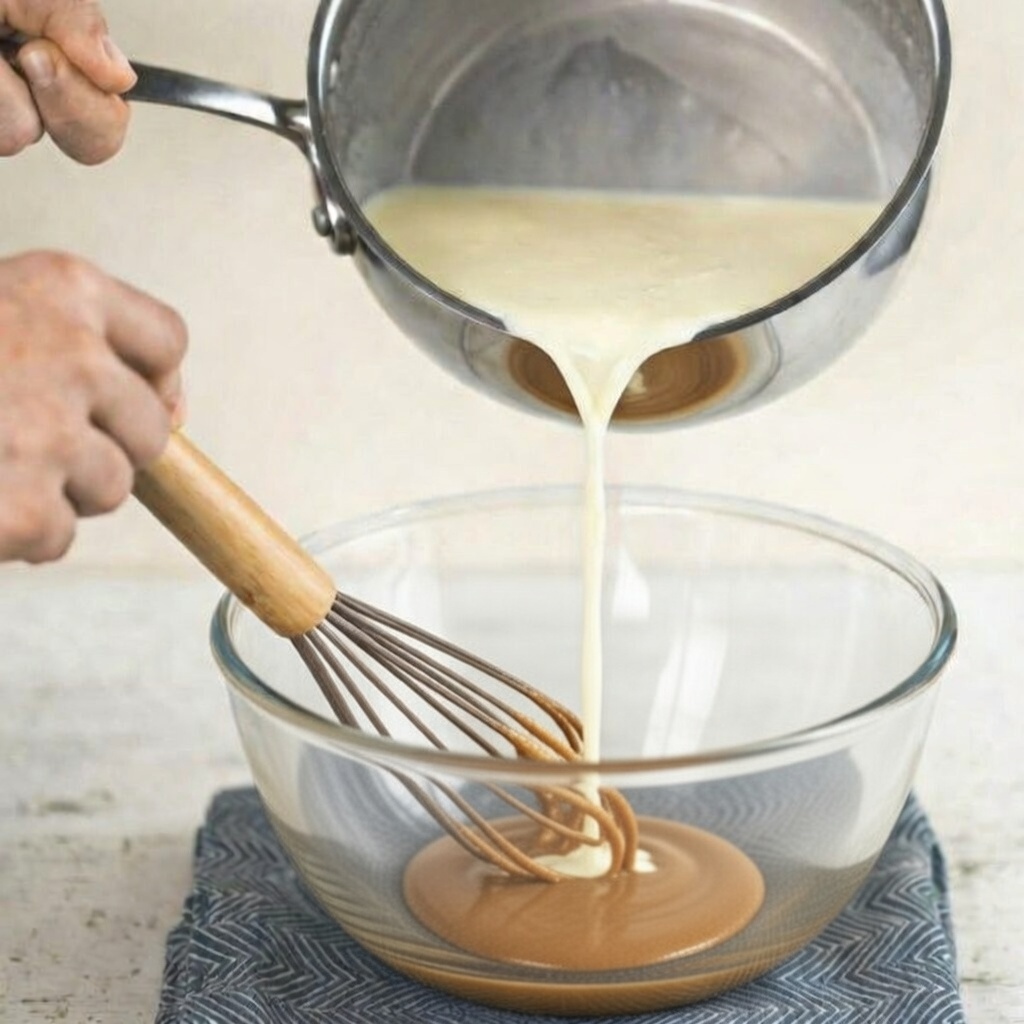
Gradually pour the thickened milk over the hazelnut butter, whisking to create a smooth mixture.
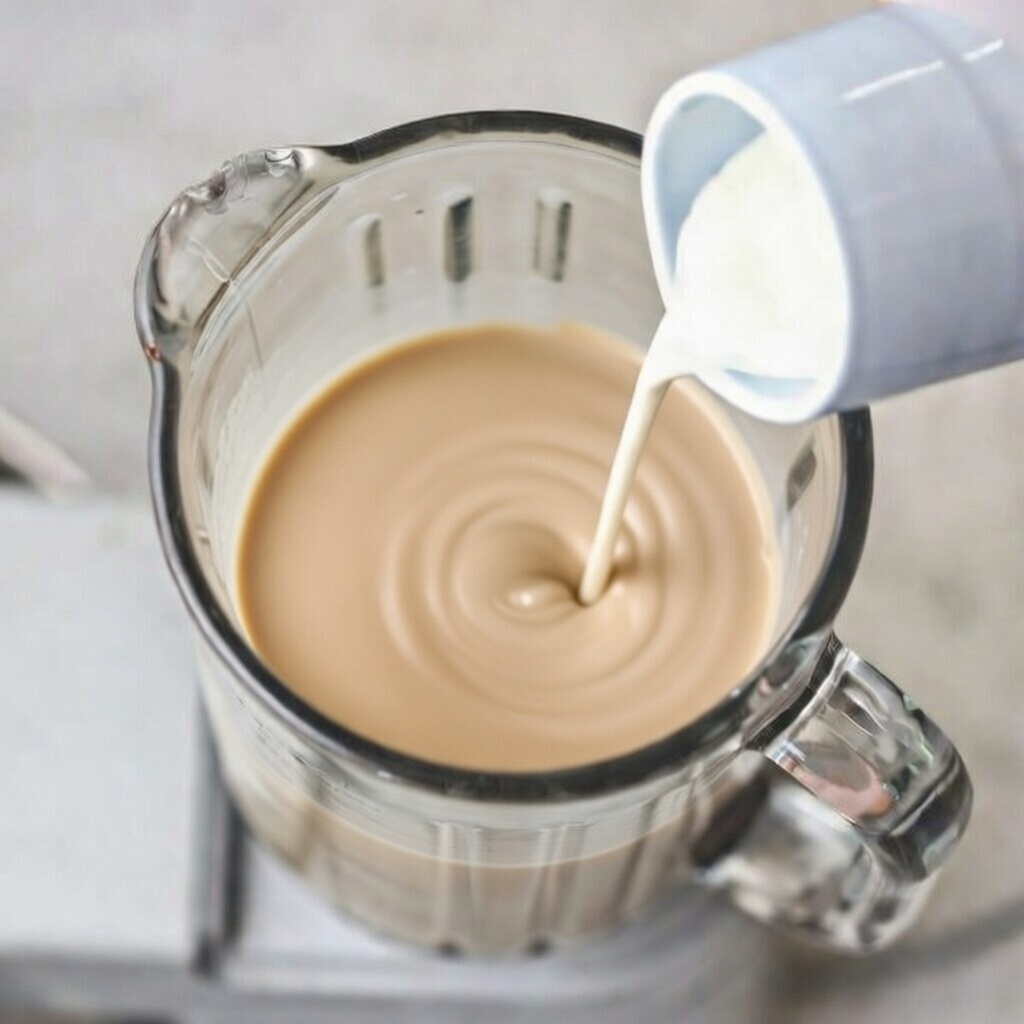
Blend the mixture. Add the cold heavy cream and blend again until smooth.
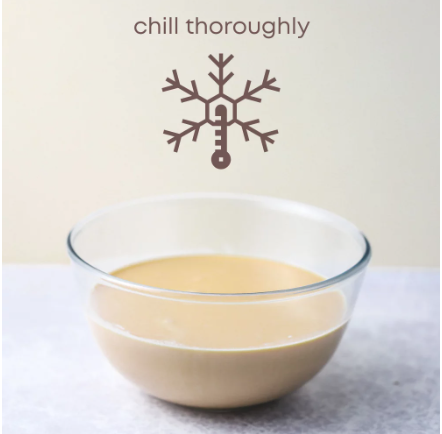
Cool the ice cream mixture down over an ice bath.
Churn in your ice cream maker until fluffed up and creamy.

Put it in the freezer for a few hours to set.

As soon as it sets, you can either serve it from the ice cream maker bowl or transfer to a container and store it in the freezer.

When making ice cream, it’s best to weigh all your ingredients—even the liquids. We also recommend weighing liquids directly into your bowl or pan as you follow the recipe, rather than measuring them in a separate container and transferring them. This helps avoid small but unnecessary losses during transfer.
If you don’t have a kitchen scale, use the following guidelines:
• 1 cup (US) = 237 ml
• 1 tablespoon = 15 ml
Sugar: Measuring sugar by tablespoons is more accurate than using cups. Use a proper 15 ml measuring tablespoon—not a regular spoon. One level tablespoon equals about 13 grams of sugar. To measure accurately, level off each scoop with the flat side of a knife.
Milk and heavy cream: When measuring liquids by volume, always use a rubber spatula to thoroughly scrape any residue left in the measuring cup. This ensures you’re using the full amount.
Please note: the metric, imperial, and volume measurements provided in our recipes
This recipe yields approximately 1.24 liters (1.24 quarts) of ice cream mixture before churning, making it ideal for ice cream makers with a capacity of 1.5 to 2 liters (quarts).
To adjust the batch size, use the following ingredient ratios by weight based on your desired total mixture weight:
Whole milk: 58.5%
Heavy cream (35% fat): 14.1%
Sugar: 17.3%
Hazelnut butter: 8.1%
Cornstarch: 2.0%
For example, to prepare a 1000 g (approx. 1 liter) batch of ice cream mixture, you’ll need:
Whole milk: 1000 g × 58.5% = 585 g
Heavy cream: 1000 g × 12.1% = 141 g
Sugar: 1000 g × 17.3% = 173 g
Hazelnut butter: 1000 g × 10.1% = 81 g
Cornstarch: 1000 g × 2.0% = 20 g
You can scale the recipe up or down using these same percentages to match the size of your ice cream maker.
Here are a few simple ways to deepen the flavour of your Hazelnut Ice Cream, enhance the texture, and add a personal twist:
✨ Use Raw Cane Sugar
Enhance the flavour by replacing regular white sugar with high-quality raw cane sugar like Demerara or Turbinado. Their gentle caramel notes pair beautifully with the roasted richness of hazelnut, adding warmth and depth to the ice cream.
✨ Add Citrus Peel
For a subtle lift, add a small piece of citrus peel to the mixture during the chilling stage (Step 2), then remove it before churning:
Orange peel gives a classic, cozy feel.
Mandarin adds a soft, floral sweetness.
Lemon zest brightens the base.
Bergamot (or a little Earl Grey) brings a refined, floral citrus note.
✨ A Touch of Vanilla
Half a teaspoon of vanilla paste or the seeds from half a vanilla bean adds warmth and rounds out the flavour without overpowering the hazelnut.
✨ Add a Pinch of Sea Salt
Just a tiny pinch makes a huge difference. It enhances the nuttiness and balances the sweetness—especially if your hazelnut butter is unsalted.
✨ Boost with Coffee
1–2 teaspoons of espresso or strong cold brew bring out the roasted notes and add a rich, mocha-like depth to the ice cream.
✨ A Splash of Frangelico
For an adult-friendly twist, stir in a tablespoon of hazelnut liqueur before churning. It adds flavour and helps keep the ice cream smooth and scoopable straight from the freezer.
✨ Add Crunchy Bits
For extra texture, fold in 150g (5.3 oz) of unsalted, roasted hazelnuts, lightly crushed. Add them during the last few minutes of churning, or mix them in by hand after churning. You can also try cocoa nibs or dark chocolate shards for added contrast and a touch of indulgence.
A rubber spatula isn’t just for scraping—it’s your best tool for stirring ice cream bases the right way.
Use it for:
✔ Scraping the bottom of the saucepan when heating milk or sugar
✔ Mixing evenly, especially when combining thick ingredients like hazelnut butter
✔ Getting every last bit out of bowls, pans, and blenders—no waste, no shortcuts
⚠️ Inadequate stirring = uneven mixture = poor texture after churning.
Good stirring gives you a smooth, even base—and better ice cream.
Don’t have a spatula?
Get a heat-resistant, flexible rubber spatula. It’s a small tool that makes a big difference—and you’ll wonder how you ever cooked without it.
The ice cream mixture needs to cool completely and hydrate before churning, so prepare it in advance (approx. 8 hours before) to give it time to chill in the refrigerator.
If your ice cream maker has a removable freezer bowl, put it in the freezer for the whole time indicated by the manufacturer before churning, usually 24 hours.
Prepare the hazelnut butter: Place the hazelnut butter (100 g / 3.5 oz) in a large bowl and set it aside.
Make a cornstarch slurry: In a heatproof bowl, whisk until smooth the cornstarch (25 g / 1 oz) with a splash or two of the measured cold milk (725 g / 25.6 oz). Leave your whisk in the bowl—you’ll need it again soon.
Heat the milk and sugar: In a medium saucepan, combine the remaining milk and sugar (215 g / 7.6 oz). Heat over medium-high, stirring often with a rubber spatula, until the sugar dissolves and the milk is hot and steamy. Do not boil.
Combine with the slurry: Slowly pour the hot milk into the cornstarch slurry bowl in a steady stream, whisking continuously to prevent lumps. Once fully combined, scrape the sides of the bowl with a rubber spatula to ensure no cornstarch is left unmixed. Whisk again briefly to smooth everything out.
Thicken the mixture: Scrape the combined mixture back into the saucepan and place it over medium heat. Cook for a few more minutes, stirring constantly with the rubber spatula, until the mixture thickens slightly and coats the spatula.
Scrape the bottom of the saucepan as you stir to prevent the milk from catching and burning. If you have a thermometer, the target temperature is around 72°C (162°F).
Do not let it sit in the saucepan—move directly to the next step.
Incorporate the hot milk: Gradually pour the thickened milk over the hazelnut butter, a little at a time, whisking to create a smooth, even mixture.
Scrape with a rubber spatula: Use a flexible rubber spatula to wipe down the sides and bottom of the bowl. Make sure no hazelnut butter is left unmixed.
Blend the base: Blend the mixture with an immersion blender (or transfer to a regular blender) until fully combined.
Add the cold heavy cream: Pour in the cold heavy cream (175 g / 6.2 oz) and blend again until smooth.
Check your blending: The mixture should be fully homogenised, with a uniform colour and texture. If needed, pause and scrape down the sides and bottom of the bowl or blender to ensure nothing is stuck or left behind. A quick check here avoids surprises later during churning.
Cool it down: prepare an ice bath by putting the bowl with the ice cream mixture into a larger bowl and filling the empty sides with ice cubes and cold water. How many ice cubes? A tray of ice cubes (200 g; 7 oz of ice) is enough to bring the ice cream mixture to room temperature. Let the ice cream mixture cool down for 30 minutes, stirring occasionally.
Chill until completely cold: cover the bowl and refrigerate for at least 8 hours and up to 3 days.
Check if the ice cream mixture is cold before churning it: below 12ºC / 54ºF / it feels fridge-cold when you place your (clean) finger into it.
Prepare the ice cream maker according to the manufacturer’s instructions.
Blend before churning: briefly blitz the ice cream mixture with an immersion blender, stopping once to scrape down the sides and bottom with a rubber spatula. This improves consistency and ensures a smooth, even texture.
Churn: with the machine running, pour the ice cream mixture through the canister and into the ice cream maker. Leave to churn until fluffed up and creamy; depending on your ice cream maker, this can take anywhere from 30-60 minutes.
This ice cream mixture expands and becomes airy as it churns. You’ll know it’s ready when it looks smooth, creamy, and slightly wavy—similar to soft-serve ice cream. Churning time varies depending on your machine and can take anywhere from 30 to 70 minutes.
To check the texture, lift a spoonful. It should be thick enough to stay on the spoon, but still soft. If it looks too thin or starts melting immediately, it needs more time.
If you’re unsure, let it churn for 10 more minutes. Keep in mind that it won’t look like store-bought ice cream at this point—it will still be soft. It only becomes firm and scoopable after a few hours in the freezer.
Stop the machine once the mixture is thick and creamy. If you continue churning beyond that point, the mixture can start losing the air it has built up and may seize, resulting in a dense, heavy texture.
One important note: some ice cream makers are programmed to stop automatically after a fixed time, but that doesn’t always mean the ice cream is ready. If your machine stops and the mixture still looks too soft, simply restart it and continue churning until the texture improves.
Put in the freezer to set: before serving the ice cream or moving it to a container for storing, you have to put it in the freezer to set. To do so, turn off the ice cream maker and:
· remove the removable freezer bowl (still filled with the ice cream) from the ice cream machine
· remove the paddle, scraping any ice cream attached to it back into the ice cream bowl
· cover the ice cream bowl and place it in the freezer
Setting time depends on many factors; see notes below for indicative times.
Serve or store: when it sets, you can serve it directly from the removable freezer bowl or transfer it to an airtight container for longer storage.
The setting time depends on the type of ice cream maker you’re using. Here are the general guidelines:
3–5 hours for machines with removable freezer bowls (these bowls must be pre-frozen before churning)
Under 1 hour for machines with built-in compressors and aluminum bowls
⚠️ Important: Ice cream in aluminum bowls sets quickly. Do not leave it for too long—once fully frozen, it can become extremely hard and difficult to remove without risking scratches to the bowl. Always monitor it closely.
To check if the ice cream is ready, aim for an internal temperature of –11°C (12°F). If you don’t have a thermometer, use this simple test:
Insert a round-tip knife all the way to the bottom of the ice cream:
✔ If it goes in smoothly but meets gentle resistance, it’s ready
✖ If it feels hard on top but soft underneath, it needs more time
✖ If it’s too firm to insert the knife, it’s over-frozen and likely too hard to scoop
If it’s over-frozen, don’t worry—head to the next section for how to bring it back to scoopable.
If the ice cream sits in the freezer in the removable freezer bowl for too long after it has set, it can become too hard to scoop or remove.
To make it scoopable again:
Place the bowl in the refrigerator and allow the ice cream to soften gradually.
Here’s how long that may take:
4–10 hours for removable freezer bowls (pre-freeze models)
1–2 hours for aluminum bowls (from compressor ice cream makers)
Note: These times are approximate and may vary depending on your fridge and the amount of ice cream. Check the texture occasionally as it softens.
Once the ice cream is soft enough to scoop—or its internal temperature reads approximately –11°C (12°F)—you can:
✔ Transfer it to another container and store it in the freezer
✔ Or serve it directly from the bowl
Just be sure to avoid digging into an over-frozen bowl with hard utensils, especially if using a nonstick-coated or aluminum bowl.
Straight after churning, the ice cream has a soft-serve consistency and melts almost instantly on contact. At this stage, it’s too soft to serve neatly or transfer easily—it’s simply too messy to handle.
Freezing the ice cream immediately after churning allows it to set properly. This step brings it to the right texture: scoopable, stable, and easy to portion or transfer into a storage container.
It’s the final step that turns churned ice cream into finished ice cream.
Storing: Transfer the finished ice cream to a lidded container and store it in the freezer for up to one month.
Cover it well to protect it from absorbing any unwanted freezer smells.
Scooping: Like all artisanal-style ice creams, this one freezes hard over time.
To make it scoopable again, place the container in the refrigerator for 45–60 minutes, or until the internal temperature reaches about –11°C (12°F).
Once softened, it’ll scoop cleanly and serve beautifully.


