

THE TAKE-IT-EASY ICE CREAM
With milk, heavy cream, and sugar.
Milk, cream, sugar. That’s all it takes. With no eggs, no starches, and no stabilisers, this recipe keeps things simple—and still delivers a smooth, satisfying ice cream you’ll want to make again and again.
A higher ratio of cream gives the base its rich body and soft, airy texture. The milk is gently warmed to dissolve the sugar, then cooled quickly before stirring in the cream.
The result is a clean, milky flavour that’s surprisingly bold—sweet, round, and complete on its own. There’s no need for vanilla.
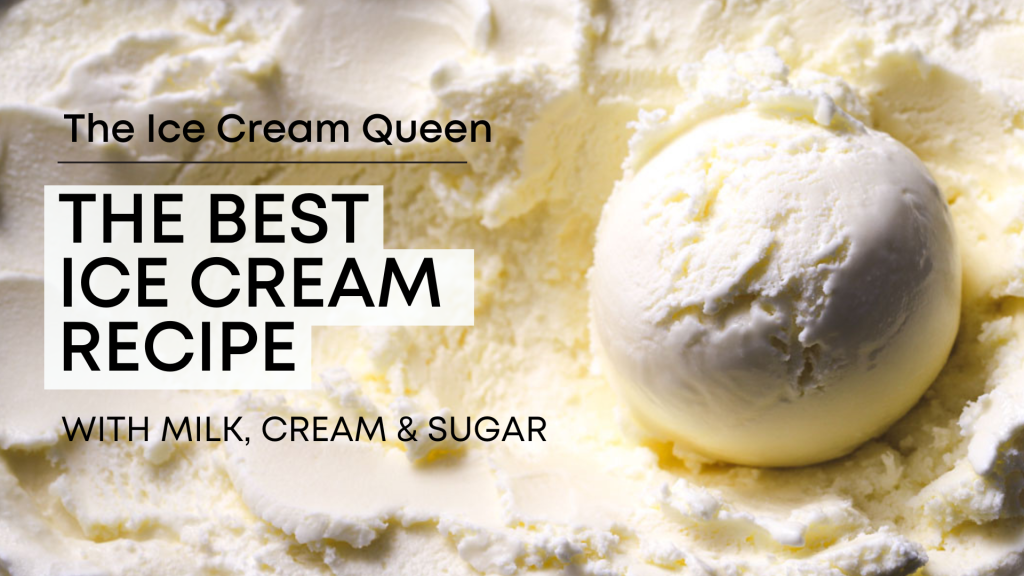
This is what ice cream shops call Fior di Latte: the purest expression of milk and cream. Made the Philadelphia way, without eggs or steeping, it’s fast, fresh, and endlessly repeatable.
Just proper ice cream—made easy.
also available:
THE FRENCH-STYLE ICE CREAM. Rich and velvety, this is a custard-based ice cream; a tad tricky to make, but so worth it. With milk, heavy cream, sugar, egg yolks.
THE ITALIAN WAY. This is your hot weather ice cream: easy to make, and resistant to melting. Also the lowest in heavy cream. With milk, heavy cream, sugar, cornstarch.
LIKE A PRO. The closest you can get to store-bought ice cream with just one extra ingredient: xanthan gum. With milk, heavy cream, sugar, xanthan gum.
Do not reduce or replace anything; everything is there for a reason.

• Sugar: you can use regular sugar (white granulated sugar) or a raw cane sugar such as Demerara or Turbinado, which enhances the chocolate’s flavour.
Do not use any other sugar or sweetener, natural or artificial, liquid or powder, like honey, stevia, golden syrup, table sweeteners, confectioner’s sugar, etc.
• Milk: use whole milk, with around 3,5% fat. Do not substitute with skimmed milk (lower fat) or non-dairy milk. You need the fat, milk proteins and lactose that whole milk contains for this ice cream recipe.
• Heavy cream: For this recipe, you can use heavy cream with 35% and up to 36% fat content. It is also OK to use heavy cream suitable for whipping or ultra-pasteurised cream, if it has the right fat content (35-36% fat). Do not use low-fat or non-dairy cream, the ice cream will be icy.
This is a quick overview of the recipe. If you are new to ice cream making, do read the recipe before proceeding.
Warm the sugar with half of the milk until it is hot and steamy and the sugar dissolves.

Pour the warm milk into a heatproof bowl and set the bowl over an ice bath; chill until completely cold.

Add the rest of the cold milk and all the heavy cream; stir to combine.

Churn in your ice cream maker until fluffed up and creamy.

Put it in the freezer for a few hours to set.

As soon as it sets, you can either serve it from the ice cream maker bowl or transfer to a container and store it in the freezer.

If the amount of heavy cream in this Philadelphia-style recipe feels like too much, don’t reduce it. The cream isn’t just there for richness—it’s what gives the ice cream its body and texture, since we’re not using eggs or starch to thicken the base.
Instead of cutting back, try the cornstarch-based version. It uses much less cream and still gives you a smooth, scoopable texture—thanks to the starch doing the work of thickening.
Philadelphia-style keeps things simple by skipping the thickening step entirely. But that means we rely on the cream to do all the heavy lifting when it comes to structure.
When making ice cream, prefer to weigh all the ingredients, even the liquid ones. We also recommend – whenever possible – to weigh the liquid ingredients directly into the bowl/pan as you proceed with the recipe instead of transferring them from one bowl to another because this transfer causes a small -but unwanted- loss of quantity.
If you do not have a kitchen scale, follow these guidelines:
• 1 cup (US) = 237 ml | 1 tablespoon = 15 ml
• sugar: measuring sugar in tablespoons is more accurate than measuring it in cups. Use a 15 ml measuring tablespoon (not a regular one); this is 13 gr of sugar. To measure correctly, each time you scoop the sugar, level it with the flat side of a knife.
• milk and cream: thoroughly scrape with a rubber spatula any residues left on the sides and bottom of the cup every time you measure something and empty it.
Note that the quantities in each measuring system (grams, ounces, and cups) in this recipe are not accurate conversions, so choose a measuring method and use this for
This recipe makes a 1.2 litre/quart ice cream mixture (before churning), perfect for ice cream makers with a capacity of 1.5 and up to 2 litres/quarts (like Cuisinart ice cream makers).
If you need to scale the ice cream mixture up or down, use this ratio of the ingredients (in weight only):
milk 35% / heavy cream 49.4% / sugar 15.6 %
in desired total weight of ice cream mixture.
You can combine double cream with whole milk to make heavy cream for this recipe.
To make the 585 g (20 oz) heavy cream, you need:
To make the heavy cream, put the double cream in a medium bowl, then pour in the milk, a little at a time, stirring smoothly with a rubber spatula. Avoid whisking, as it may turn into whipped cream.
The resulting heavy cream has 36% fat, perfect for this ice cream. Proceed with the recipe, just as if you had the 585 g (20 oz) heavy cream needed.
*this 175 g (5 oz) of milk is extra to the 415 g milk (14 oz) asked in the recipe. So, if you use double cream, you need in total 590 g of milk (19 oz), from which:
A flexible rubber spatula is good for:
-wiping the bottom of the saucepan when you cook dairy on the stovetop.
-scraping residues from bowls, saucepans etc.
If you do not have one, we strongly encourage you to buy one, preferably a flexible one.
The ice cream mixture needs to cool completely before churning, so prepare it in advance (approx. 8 hours before) to give it time to chill in the refrigerator. Alternatively, if you have plenty of ice cubes, you can have the ice cream mixture ready for churning in less than two hours; you will find detailed instructions under step 2.
If your ice cream maker has a removable freezer bowl, put it in the freezer for the whole time indicated by the manufacturer before churning, usually 24 hours.
Before churning, the ice cream mixture must be chilled to fridge-cold temperature. There are two ways to do this:
Option 1: Overnight Chill in the Fridge (Low Effort)
Transfer the blended mixture into a clean container, cover, and refrigerate overnight.
No ice bath needed.
This is the easiest option and gives the flavors more time to develop.
Option 2: Ice Bath Chill (Ready in About 40 Minutes)
To have it ready for churning fast, cool the mixture to fridge-cold using an extra-cold ice bath. This is The Ice² Bath — you can watch everything you need to know about it here (highly recommended).
Here’s how:
• Fill a large bowl or basin halfway with plenty of ice cubes and cold water.
• Nest the bowl with your ice cream mixture inside the ice bath.
• Stir the mixture occasionally to help it chill evenly.
• As the ice melts, add more ice cubes to keep the bath as cold as possible.
• Check the temperature of the ice cream mixture with your finger (it should feel ice-cold) or use a thermometer.
It’s ready when the the temperature drops below 12°C (54°F).
If the ice bath isn’t cold enough, the mixture won’t chill properly, so be generous with the ice and stir often.
Check if the ice cream mixture is cold before churning it: 4ºC–12ºC / 39ºF-54ºF / it feels fridge-cold when you place your finger into it.
Prepare the ice cream maker according to the manufacturer’s instructions.
Blend before churning: briefly blitz the ice cream mixture with an immersion blender, stopping once to scrape down the sides and bottom with a rubber spatula. This improves consistency and ensures a smooth, even texture.
Churn: with the machine running, pour the ice cream mixture through the canister and into the ice cream maker. Leave to churn until fluffed up and creamy; depending on your ice cream maker, this can take anywhere from 30-60 minutes.
This ice cream mixture expands and becomes airy as it churns. You’ll know it’s ready when it looks smooth, creamy, and slightly wavy—similar to soft-serve ice cream. Churning time varies depending on your machine and can take anywhere from 30 to 70 minutes.
To check the texture, lift a spoonful. It should be thick enough to stay on the spoon, but still soft. If it looks too thin or starts melting immediately, it needs more time.
If you’re unsure, let it churn for 10 more minutes. Keep in mind that it won’t look like store-bought ice cream at this point—it will still be soft. It only becomes firm and scoopable after a few hours in the freezer.
Stop the machine once the mixture is thick and creamy. If you continue churning beyond that point, the mixture can start losing the air it has built up and may seize, resulting in a dense, heavy texture.
One important note: some ice cream makers are programmed to stop automatically after a fixed time, but that doesn’t always mean the ice cream is ready. If your machine stops and the mixture still looks too soft, simply restart it and continue churning until the texture improves.
Put in the freezer to set: before serving the ice cream or moving it to a container for storing, you have to put it in the freezer to set. To do so, turn off the ice cream maker and:
· remove the removable freezer bowl (still filled with the ice cream) from the ice cream machine
· remove the paddle, scraping any ice cream attached to it back into the ice cream bowl
· cover the ice cream bowl and place it in the freezer
Setting time depends on many factors; see notes below for indicative times.
Serve or store: when it sets, you can serve it directly from the removable freezer bowl or transfer it to an airtight container for longer storage.
The setting time depends on the type of ice cream maker you’re using. Here are the general guidelines:
3–5 hours for machines with removable freezer bowls (these bowls must be pre-frozen before churning)
Under 1 hour for machines with built-in compressors and aluminum bowls
⚠️ Important: Ice cream in aluminum bowls sets quickly. Do not leave it for too long—once fully frozen, it can become extremely hard and difficult to remove without risking scratches to the bowl. Always monitor it closely.
To check if the ice cream is ready, aim for an internal temperature of –11°C (12°F). If you don’t have a thermometer, use this simple test:
Insert a round-tip knife all the way to the bottom of the ice cream:
✔ If it goes in smoothly but meets gentle resistance, it’s ready
✖ If it feels hard on top but soft underneath, it needs more time
✖ If it’s too firm to insert the knife, it’s over-frozen and likely too hard to scoop
If it’s over-frozen, don’t worry—head to the next section for how to bring it back to scoopable.
If the ice cream sits in the freezer in the removable freezer bowl for too long after it has set, it can become too hard to scoop or remove.
To make it scoopable again:
Place the bowl in the refrigerator and allow the ice cream to soften gradually.
Here’s how long that may take:
4–10 hours for removable freezer bowls (pre-freeze models)
1–2 hours for aluminum bowls (from compressor ice cream makers)
Note: These times are approximate and may vary depending on your fridge and the amount of ice cream. Check the texture occasionally as it softens.
Once the ice cream is soft enough to scoop—or its internal temperature reads approximately –11°C (12°F)—you can:
✔ Transfer it to another container and store it in the freezer
✔ Or serve it directly from the bowl
Just be sure to avoid digging into an over-frozen bowl with hard utensils, especially if using a nonstick-coated or aluminum bowl.
Straight after churning, the ice cream has a soft-serve consistency and melts almost instantly on contact. At this stage, it’s too soft to serve neatly or transfer easily—it’s simply too messy to handle.
Freezing the ice cream immediately after churning allows it to set properly. This step brings it to the right texture: scoopable, stable, and easy to portion or transfer into a storage container.
It’s the final step that turns churned ice cream into finished ice cream.
Storing: Transfer the finished ice cream to a lidded container and store it in the freezer for up to one month.
Cover it well to protect it from absorbing any unwanted freezer smells.
Scooping: Like all artisanal-style ice creams, this one freezes hard over time.
To make it scoopable again, place the container in the refrigerator for 45–60 minutes, or until the internal temperature reaches about –11°C (12°F).
Once softened, it’ll scoop cleanly and serve beautifully.
Your privacy settings
Manage Consent Preferences
Necessary
Analytics
Embedded Videos
Marketing
Facebook Advanced Matching
Facebook CAPI


2 Responses
Does anyone read or respond to these emails any more?
Thanks for mentioning it — it seems the form isn’t working. I’ll fix it as soon as possible. In the meantime, feel free to contact me at asktheicecreamqueen@gmail.com
.